When most homeowners think about landscape lighting in Toronto, they usually picture the visual impact, the warm glow highlighting a stone façade or the elegant path lights that transform a backyard into an inviting evening space.
While outdoor lighting certainly enhances curb appeal, its value goes far beyond aesthetics. A professionally designed outdoor security lighting system can dramatically improve the safety, visibility, and overall security of your property.
At Moonstruck Lighting Ltd, we believe the best lighting designs combine beauty with protection. A well‑planned lighting system doesn’t just make your home or business look incredible at night, it helps keep it safe.
Eliminating Shadow Zones Around Your Property
Dark areas around a home or commercial building create the perfect hiding places for unwanted visitors. Large sections of unlit yard space, side entrances, and back alleys make it easier for someone to approach unnoticed.
This is where professional outdoor security lighting becomes essential.
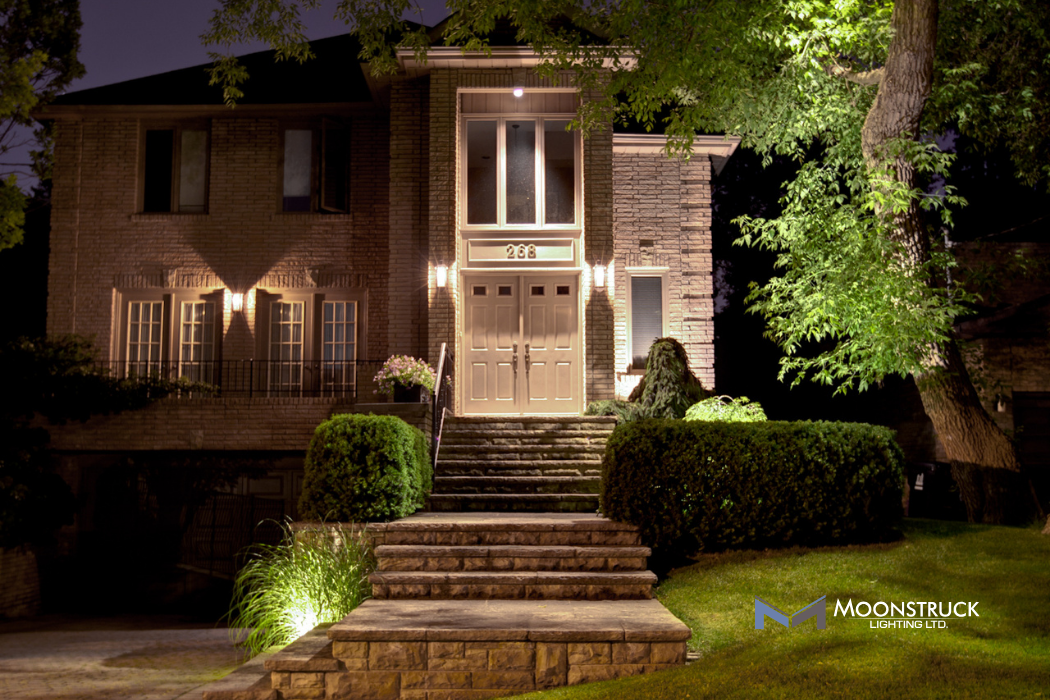
Strategic downlighting, often installed in trees or along rooflines, creates a natural “moonlight” effect that gently illuminates wide areas without the harsh glare of traditional floodlights. This technique provides excellent visibility while maintaining a comfortable and elegant atmosphere.
For businesses, properly installed landscape lighting in Toronto commercial properties also improves camera visibility. Security cameras perform much better in evenly lit environments, capturing clearer images rather than dark silhouettes.
Preventing Trips, Falls, and Nighttime Hazards
Outdoor spaces can become dangerous after sunset. Uneven pavers, steps, garden borders, and deck edges are easy to navigate during the day but can quickly become hazards at night.
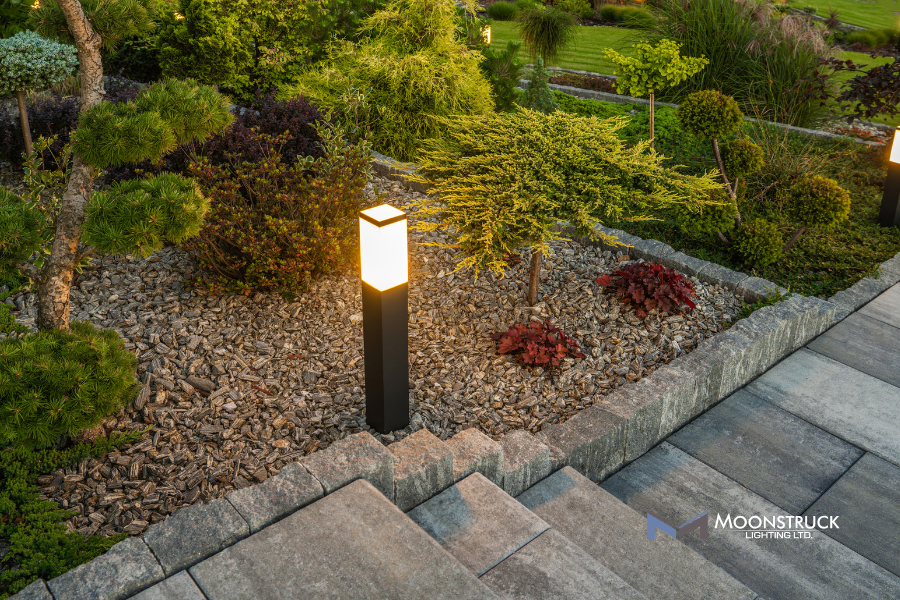
Professional landscape lighting systems use low-profile path lights and step lights to guide movement safely throughout the property.
These fixtures are designed to:
Illuminate walkways and pathways
Highlight elevation changes and stairs
Improve visibility around entrances and driveways
For commercial properties, this type of outdoor security lighting also reduces liability risks by helping prevent slips, trips, and falls for employees, customers, and visitors.
Creating the “Someone Is Home” Effect
Lighting is also one of the most effective deterrents against unwanted activity.
A property that consistently lights up every evening signals that it is actively maintained and monitored. Homes and businesses that remain dark for long periods are far more likely to attract attention from potential intruders.
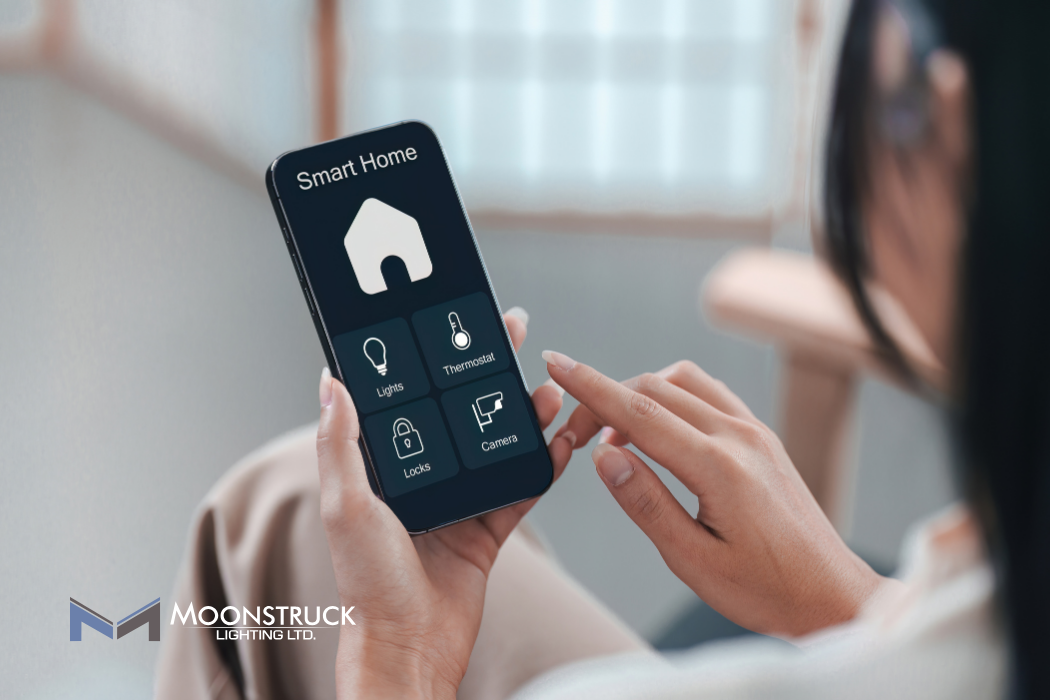
Modern landscape lighting in Toronto often includes smart automation features that allow property owners to schedule lighting zones, control systems remotely, and create consistent lighting patterns.
Advanced LED systems can even simulate natural occupancy patterns, making it difficult for anyone outside the property to determine whether someone is home or away.
Outdoor Lighting Features That Improve Security
Several lighting techniques work together to create safer properties:
Path Lighting – Illuminates walkways and entry points to prevent trips and falls
Uplighting – Highlights architectural features while removing dark hiding spots
Motion Sensor Lighting – Activates when movement is detected, deterring intruders
Smart Lighting Systems – Allows scheduling, automation, and remote control
When combined into a professionally designed system, these elements create a property that feels welcoming, visible, and secure.
Professional Landscape Lighting in Toronto
At Moonstruck Lighting Ltd, we approach every project with both design and security in mind. Each property has unique features, shadows, and architectural elements that require careful planning.
Our team evaluates the layout of your home or business to ensure there are no dark zones or blind spots, while still delivering the elegant nighttime aesthetic that premium landscape lighting in Toronto is known for.
The result is an outdoor space that looks stunning and feels safe, whether you’re hosting guests in the evening or arriving home late at night.
If you’re considering outdoor security lighting for your Toronto property, a professionally designed system can make all the difference, and Moonstruck Lighting Ltd can help.
As the last traces of winter fade and you trade snowy boots for garden gloves around Toronto and the GTA, it’s time to turn your gaze outdoors with spring outdoor lighting. At Moonstruck Lighting, we believe that spring isn’t only about planting new blooms, it’s about illumination renewal. Whether you’re dreaming of twilight patio gatherings or simply want a safer, more welcoming path home, a touch of lighting maintenance and creativity can transform your space for the golden months ahead.
1. The Spring Outdoor Lighting Maintenance Checklist
Spring is around the corner, and before diving into design tweaks, start with a little practical TLC. Winter weather can leave your outdoor fixtures looking (and functioning) a little worse for wear. As the snow melts away, here are some things to start planning for to get your outdoor space ready.
Clean the Lenses: Dust, salt, and pollen build up can dull your fixtures. A gentle wipe with a soft, damp cloth restores that clean Moonstruck glow.
Trim the Overgrowth: Prune shrubs or vines that have overshadowed your path lights and up-lights. This simple step improves both brightness and curb appeal.
Check for “Ground Heave”: Winter’s freeze-thaw cycle can shift or tilt lights. Straighten path fixtures so your garden lines stay sharp.
Inspect the Tech: Longer days mean adjusting timers or smart controls. Fine-tuning your “on” times ensures your lights work with the season, not against it.
Did you know Moonstruck Lighting Ltd. offers maintenance and early season preparation services and packages? This includes:
Low-voltage lamp replacements
Cleaning and cosmetic repairs of fixtures
Reburying exposed conduits
Testing the entire system for optimal performance
Re-aiming and adjusting fixtures as needed
A three-visit warranty on lamps for the remainder of the calendar year
Your front entrance sets the tone for your entire home. After months of winter darkness, give it the warm welcome it deserves.
Layer the Light: Combine soft path lighting with uplights on architectural features or trees to create dimension and a sense of security.
The Warm Welcome: Choose warm-toned LEDs (around 2700K) for a cozy, inviting glow, perfect for saying “spring is here” before you even open the door.
3. Prepping the Outdoor Living Room
Spring is the early start of patio season, the perfect time to turn your deck or backyard into an outdoor living room that feels as inviting as any indoor space. An early start can let you take advantage of those perfect Spring days outside.
Task Lighting: Brighten your grill station or outdoor kitchen for safe, after-sunset cooking.
Ambiance: Dimmable lighting or bistro-style string lights set an effortless, festive tone for entertaining.
Safety First: Ensure stairs and deck edges are well-lit with subtle tread lights. For added charm, install toe-kick lighting under stairs or benches, and path lighting along walkways.
Pro Tip: Try moonlighting or down-lighting: mounting fixtures high in trees so the light filters down through branches. The effect mimics a full moon’s gentle glow and instantly transforms your patio into a romantic retreat.
4. Highlighting the Garden’s Awakening
As your landscape bursts into life, let your lighting design celebrate the season’s texture, color, and rhythm.
Focus on Early Bloomers: Aim soft spotlights on Dogwoods, Magnolias, or Cherry Blossoms to highlight spring’s fleeting beauty.
Silhouetting: If you have a beautiful fence line, sculpture, or trellis, place lights behind it to create an enchanting shadow play after dark.
Ready for a Glow-Up Toronto? Let’s Get Moonstruck!
Your outdoor space is an extension of your lifestyle, don’t let it disappear when the sun goes down. Whether you’re refreshing your existing system or dreaming up a completely new design, Moonstruck Lighting Ltd. is here to help you make your spring nights as beautiful as your days. Call us or email us to book a consultation and learn how we can get your Spring season off to a great start, so that you are maximizing your outdoor experience throughout the summer.
Imagine waking up in the morning and, before your alarm even starts to chirp, your bedroom lights gently brighten, mimicking the rising sun. You open your eyes to a soft, warm glow rather than a jarring blaze of white. This is the beauty of home lighting automation, a subtle but powerful way to make every part of your day a little more comfortable, convenient, and beautiful.
Morning begins not with an alarm, but with atmosphere. As the first traces of light slowly illuminate your bedroom, the tone is set for a calm start, soft amber hues easing into warmer daylight tones. The transition feels effortless, like natural sunlight filtering through your window, quietly cueing your body to awaken.
When you rise, your lighting gently responds. Subtle strategic lighting leading you down the hallway toward the kitchen. Each space greets you at just the right brightness, never harsh, always gracious. By the time you reach your kitchen, the lighting brightens a little more, complementing the serenity of your morning coffee.
Perhaps your kitchen fixtures adjust to a crisp, energizing tone as the aroma of coffee fills the air. You haven’t flipped a single switch, the lights have simply followed your morning path, intuitively shaping an experience that feels natural and considered. It’s not just illumination; it’s a quietly orchestrated beginning to your day, designed for ease, comfort, and ritual.
Midday Energy and Focus
During working hours, lighting automation can help maintain your focus and energy. Bright, cool tones around your workspace promote alertness, while other areas of your home stay at restful, warmer settings. With simple voice or app-based controls, your environment shifts effortlessly to match your needs, whether you’re meeting a deadline or pausing for lunch.
Evening Comfort and Ambience
As evening falls, lighting automation transforms the atmosphere. A single command can soften the lights for dinner or entertainment, creating a warm, inviting mood. Subtle motion-triggered lights can gently illuminate hallways, guiding you through the night without harsh glare. Every space feels considered, comfortable, and calm.
A Calm End to the Day
When it’s time to unwind, lighting can transition into dim, golden tones that encourage relaxation and rest. With a customized “Goodnight” routine, your home eases into quiet comfort, lights off, mind at peace.
Added Security and Peace of Mind
Lighting automation also provides a discreet yet powerful layer of home security. When you’re away, your system can activate lighting sequences that mimic natural routines, lights turning on and off at varied times to create the impression of occupancy. This realistic patterning offers subtle deterrence without any effort on your part.
Beyond that, smart outdoor lighting ensures entrances, pathways, and key areas around your property are well-lit only when needed, providing both safety and ambiance. Geofencing can illuminate driveways or patios as you arrive home, offering a quiet welcome while enhancing visibility.
With thoughtful design, lighting automation becomes an extension of your home’s security blending seamlessly into the architecture while offering reassurance that your space is always protected, whether you’re across town or abroad.
The Real Impact: Effortless Comfort
Beyond convenience, lighting automation enhances well-being, efficiency, and the beauty of your space. Thoughtfully designed lighting supports your natural rhythms and complements your home’s architecture, creating an atmosphere that feels uniquely your own.
At Moonstruck Lighting Ltd, we specialize in curating intelligent, elegant indoor and outdoor lighting experiences that blend artistry with innovation. Our team can design and install a customized automation system that brings harmony, comfort, and quiet sophistication to your home. Email us or call us to learn more about how we can help you maximize your smart home vision in Toronto and surrounding areas.
The boundary between home and office has become increasingly blurred. Whether you’re balancing multiple activities throughout the day or adapting your space for different purposes, lighting plays a critical role in supporting both productivity and well-being. At Moonstruck Lighting Ltd, we believe that thoughtful, human-centric lighting design isn’t just about illumination—it’s about creating spaces that work with your body’s natural rhythms and adapt to your ever-changing needs.
Understanding the Modern Work/Home Challenge
The rise of hybrid work and flexible living arrangements has created a unique design challenge. Your home office needs to support deep focus during morning meetings, transition to a collaborative space for video calls, and eventually transform into a relaxing retreat for your family dinner. Yet most homes operate under a single overhead light that does none of these jobs particularly well.
The consequences of poor lighting design in work/home spaces are tangible and documented. Eye strain, headaches, and fatigue are among the most common complaints, often attributed to inadequate or poorly balanced lighting. When the lighting is too dim, you feel tired and unmotivated; when it’s too bright or harsh, you experience discomfort and distraction. More subtly, incorrect lighting disrupts your body’s internal 24-hour clock, which impacts sleep quality, alertness, and even mood.
For those navigating hybrid work arrangements, the stakes are even higher. Without proper lighting support, remote workers often experience prolonged eye fatigue, reduced concentration, and difficulty disengaging from work at day’s end. The solution isn’t to invest in brighter fixtures; it’s to design layered lighting systems that are flexible, responsive, and aligned with how you actually live and work.
The Foundation: What Is Layered Lighting?
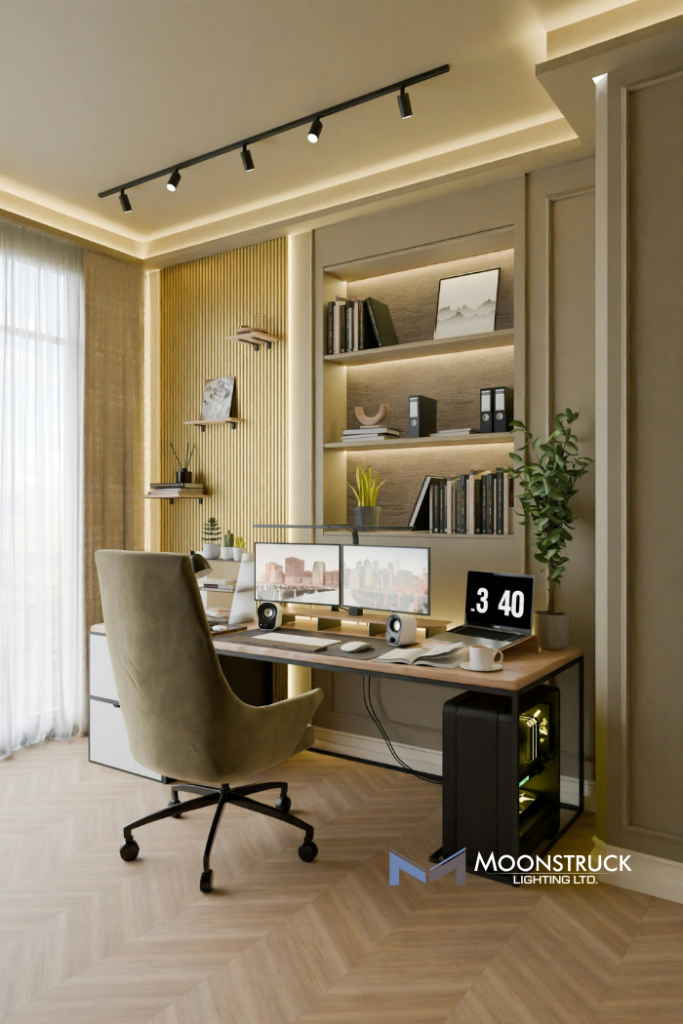
Layered lighting is a design approach that combines multiple types of light sources to create a balanced, functional, and visually appealing environment. Rather than relying on a single overhead fixture, layered lighting integrates three core components:
Ambient Lighting forms the foundational layer, providing general illumination that makes a room welcoming and easy to navigate. Recessed ceiling lights, chandeliers, and indirect ceiling fixtures typically serve this role, ensuring the entire space is visible without harsh shadows or dark corners.
Task Lighting delivers focused illumination for specific activities like reading documents, reviewing emails, detailed work at your desk, or preparing meals. Desk lamps, pendant lights, under-cabinet lighting, and adjustable wall sconces concentrate light exactly where you need it, reducing eye strain and boosting concentration.
Accent Lighting highlights architectural features, artwork, or design elements, adding depth and dimension to your space. LED strip lights, wall washers, or decorative fixtures can emphasize a bookshelf, gallery wall, or textured surface, contributing to the overall ambiance and visual interest of your room.
When these three layers work together harmoniously, something remarkable happens: your space becomes infinitely adaptable. You can dim the ambient layer and activate task lighting for focused work, then transition to a softer, warmer ambiance for evening relaxation, all within the same room.
Why Layered Lighting Is Perfect for Flexible Spaces
Versatility Without Renovation
One of the greatest advantages of layered lighting is its adaptability without requiring major structural changes. Unlike traditional office design that assumes a single, static purpose, layered systems allow you to reconfigure your environment to match your immediate needs. Whether you’re hosting a video conference, working on creative projects, enjoying a meal with family, or unwinding with a book, adjustable layered lighting lets you optimize the space for each scenario.
Energy Efficiency
Layering your lighting sources isn’t just good for your well-being, it’s also smart economics. When you can control task and ambient lighting independently, you use only the illumination necessary for your current activity. You’re not flooding an entire room with bright overhead light when you only need targeted lighting at your desk. Over time, this selective approach reduces energy consumption and lowers utility costs, particularly when paired with LED technology and smart controls.
Enhanced Mood and Comfort
Lighting directly influences your emotional state and sense of comfort. Harsh, uniform fluorescent lighting creates visual fatigue and mental strain, while thoughtfully layered lighting with varied intensities and warm or cool tones creates an environment that feels spacious, welcoming, and human-centered. By adjusting your lighting layers, you can shift the mood of a space from professional and alert during work hours to calm and restorative in the evening.
The Human-Centric Dimension: Circadian-Aligned Lighting
Layered lighting becomes truly powerful when combined with human-centric lighting principles, which go beyond basic illumination to support your body’s biological rhythms.
Understanding Circadian Rhythms
Your body operates on a 24-hour internal clock driven by circadian rhythms, which regulate sleep, wakefulness, mood, metabolism, and countless other functions. Light is the primary signal that sets and maintains this clock. When you’re exposed to bright, cool-spectrum light (high in blue wavelengths) during morning and midday hours, your body interprets this as “wake up” and increases alertness, focus, and energy. Conversely, warm, dim light in the evening signals your body to wind down, triggering melatonin production and preparing you for restful sleep.
The challenge of modern life, particularly for those working from home is that we spend most of our time indoors under static artificial lighting that bears little resemblance to natural daylight patterns. This constant, unchanging light environment can disrupt your circadian rhythm, leading to sleep disturbances, reduced daytime alertness, mood changes, and decreased overall well-being.
Dynamic Color Temperature and Intensity
Human-centric lighting design addresses this problem by adjusting the intensity and color temperature of artificial light throughout the day to mirror natural light cycles. Here’s how this translates to your work/home space:
Morning and Midday (6 AM – 2 PM): Bright, cool white light (5000K–6500K) enhances focus, energy, and alertness. This is ideal for task lighting at your desk, video calls, and detail-oriented work. The cool, energizing quality of this light supports your body’s natural peak performance window.
Afternoon (2 PM – 5 PM): A gradual transition to neutral white light (4000K–4500K) maintains focus while beginning a gentle shift toward evening. This supports the natural dip in energy many people experience mid-afternoon while keeping you engaged in your work.
Evening and Night (5 PM onwards): Warm white light (2700K–3000K) with reduced intensity creates a relaxing, restorative atmosphere. This color temperature and dimming support melatonin production and help you psychologically and physiologically shift out of “work mode” into rest and recovery.
The result? Better sleep, improved daytime focus, elevated mood, reduced eye fatigue, and a healthier overall balance between work and rest.
How Moonstruck Lighting Ltd. Designs Your Layered, Human-Centric System
Step 1: Assess Your Space and Activities
Begin by understanding how your work/home space is actually used. What activities happen in this room? When do they occur? Who uses the space? A room that serves as a home office during the day but transforms into a guest room, yoga space, or entertainment area in the evening has different lighting requirements than a dedicated office.
For example, if your room serves multiple purposes, you need lighting that’s bright and cool-toned for focused work in the morning, can dim and warm for collaborative video meetings in the afternoon, and transitions to ambient, warm lighting for evening activities. This multi-functional reality is exactly where layered, adaptable systems excel.
Step 2: Layer Your Ambient Foundation
Start with a solid ambient lighting base that fills your space evenly without glare or harsh shadows. Recessed ceiling lights, suspended linear LED luminaires, or wall-mounted indirect fixtures work well for this purpose. The goal is to create general illumination that makes the entire room visible and welcoming without being the dominant light source.
Choose LED fixtures with diffusers to minimize glare, particularly important if your work involves screen time. Aim for lighting that’s UGR-compliant (with a Unified Glare Rating below 19) to reduce visual discomfort from screen reflections and reflections on work surfaces.
Step 3: Add Focused Task Lighting
Task lighting is where your work/home space truly becomes functional. Adjustable desk lamps with proper optics direct light exactly where you need it, whether that’s your keyboard and monitor, documents, or creative work. Wall sconces beside a reading nook, under-cabinet lighting in a kitchenette area, or pendant lights over a work counter provide targeted illumination that reduces eye strain.
Invest in task lights that offer flexibility: adjustable brightness, directional controls, and ideally, the ability to modify color temperature. When you can dial in exactly the right amount of focused light for your specific task, you eliminate the need for bright overall lighting and reduce visual fatigue significantly.
Step 4: Introduce Accent Lighting for Dimension
Accent lighting serves both aesthetic and functional purposes. LED strip lights, wall washers, or subtle decorative fixtures can highlight architectural features, artwork, or design elements, adding depth and visual interest to your space. In a work/home context, accent lighting can also help define zones, making your desk area feel distinct from your living space, even in an open-concept room.
Choose accent lighting that complements your ambient and task layers. For example, warm accent lighting on a bookshelf or textured wall creates a focal point that’s visually interesting without being distracting during work hours.
Step 5: Implement Tunable White and Smart Controls
This is where human-centric design truly comes alive. Tunable white LED technology allows you to adjust color temperature within the same fixture or system, shifting from cool, energizing light during work hours to warm, relaxing light in the evening. Many modern tunable white systems can be programmed to follow natural circadian patterns automatically, or you can control them manually based on your schedule and preferences.
Smart lighting controls, whether app-based, voice-activated, or programmable, lets you create custom lighting scenes for different activities and times of day. Imagine pressing a “focus” button that automatically adjusts your ambient and task lighting to optimal levels for concentrated work, or an “evening” scene that dims your ambient layer and warms your color temperature to prepare for rest. These systems can also integrate with occupancy sensors and daylight harvesting technology, automatically adjusting brightness based on available natural light and room usage.
For those in the Toronto/Vaughan area, partnering with a local lighting specialist like Moonstruck Lighting Ltd ensures you receive expert guidance on selecting the right tunable white systems and smart controls for your specific space, preferences, and budget.
Practical Applications: Real-World Scenarios
The Home Office: Focus and Transition
Your dedicated work space needs bright, cool lighting during business hours to support alertness and productivity. Set your ambient lighting to a neutral or cool white (4500K–5000K) and position your desk lamp to provide task lighting without creating screen glare. During lunch or breaks, you might dim the ambient layer and warm the color temperature slightly, signaling your brain that it’s time to rest.
As your workday ends, gradually warm your ambient lighting and reduce intensity. This signals to your body that work is complete and helps you mentally disengage. By the time evening arrives, your space has transitioned to warm, dim lighting conducive to relaxation or family time.
The Flexible Living Space: Daytime to Evening
In a combined living and work area, layered lighting allows seamless transitions. During the day, bright ambient lighting and bright task lighting (if you have a dedicated desk area) support both work and daily activities. As afternoon progresses, gradually reduce intensity and warm color temperature.
In the evening, activate your accent lighting to create visual interest and depth, reduce ambient brightness to 50–70% of maximum, and shift to warm white tones. The result is a space that feels completely different: more intimate, more relaxing, more conducive to unwinding, without requiring you to leave your room.
The Multi-Purpose Room: Meetings, Focus Work, and Recreation
If your space hosts video meetings, focused individual work, and evening activities, you need maximum flexibility. During video meetings, maintain bright, even ambient lighting and ensure your face is well-lit without harsh shadows (position task lighting to the side or use diffused wall lights). For deep focus work, activate your task lighting and slightly reduce overall ambient brightness to minimize distractions.
For evening activities, whether that’s entertainment, hobbies, or relaxation, activate your accent lighting, dim the ambient layer significantly, and shift to warm tones. Smart lighting scenes make these transitions instant and effortless.
Health and Productivity Benefits
The research supporting layered, human-centric lighting design is compelling. Studies have shown that workers with access to proper natural daylight and well-designed artificial lighting sleep significantly better, feel more energetic, experience fewer headaches, and demonstrate measurably higher productivity. Circadian lighting systems that support natural rhythms reduce fatigue, improve focus, elevate mood, and support long-term health outcomes.
For those working from home, these benefits are particularly meaningful. Without proper lighting design, remote workers often experience increased eye strain, difficulty disengaging from work, and sleep disruption, all of which compound stress and reduce overall well-being. Layered, adaptable lighting addresses these challenges at their root.
At Moonstruck Lighting Ltd in Toronto, we understand the unique lighting challenges of modern flexible work and home spaces. We’re here to help you design a lighting solution that’s as dynamic and adaptable as the way you actually live and work. Ready to explore how layered, human-centric lighting can transform your space? Let’s talk, call or email us to learn more.