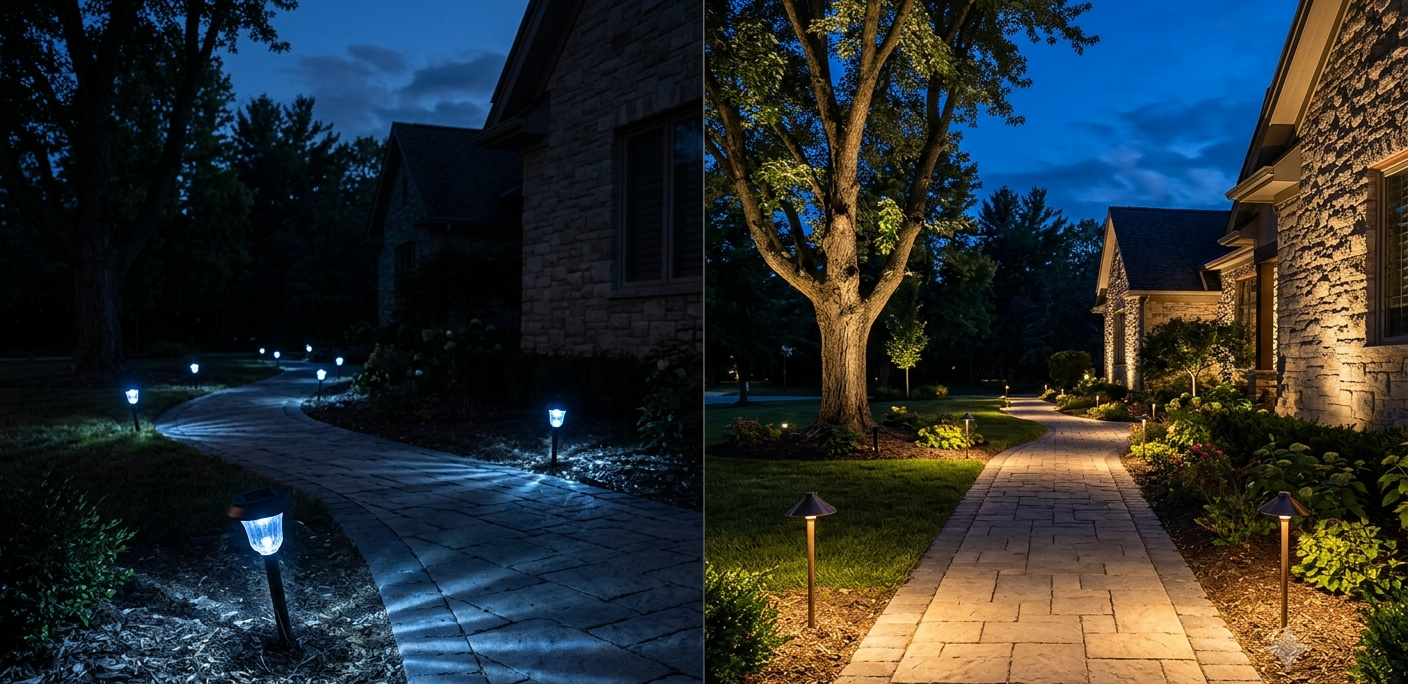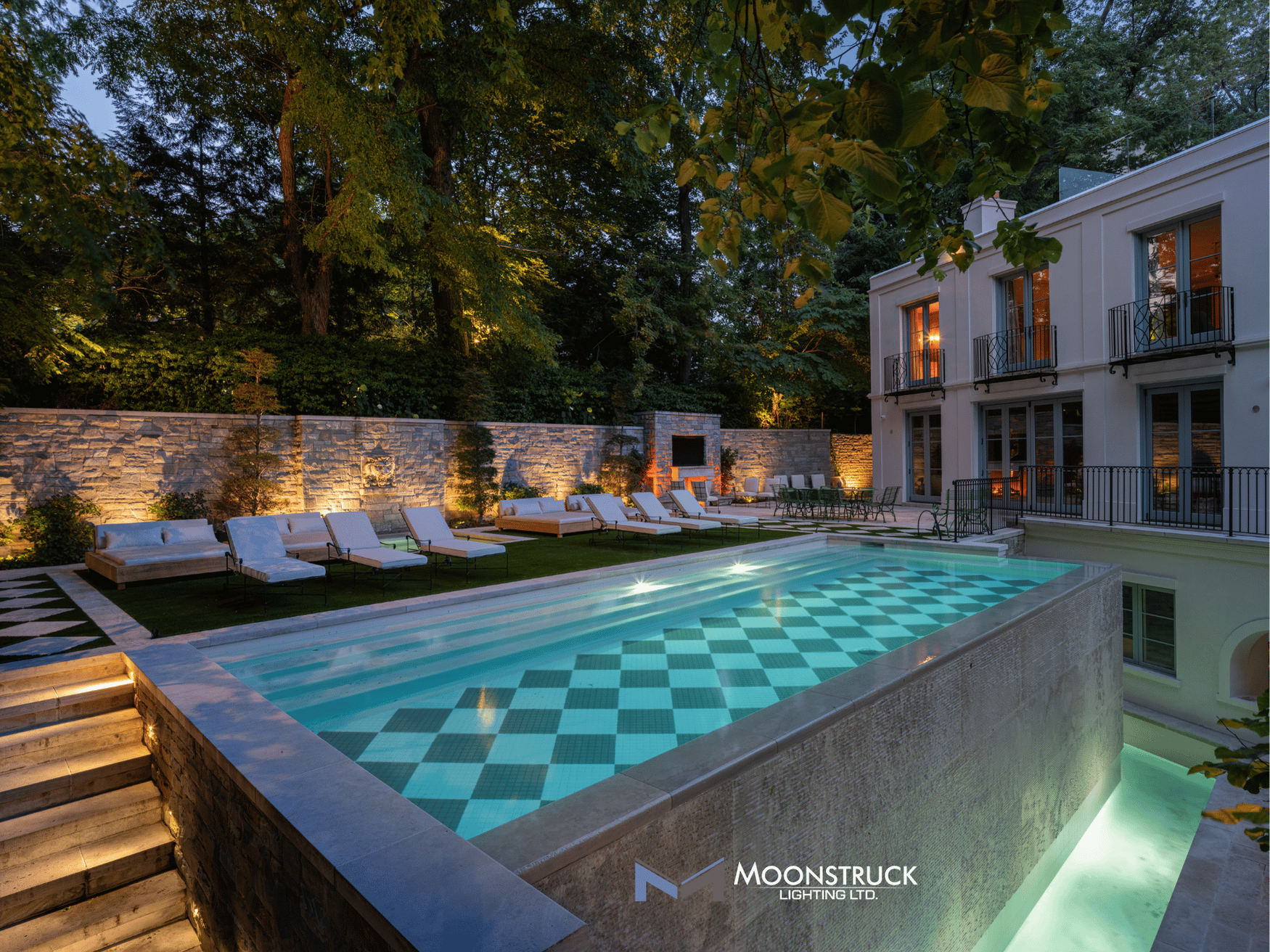
As school starts and autumn arrives, sunset times shift dramatically across Ontario, bringing shorter daylight hours and cooler temperatures. While fall foliage transforms properties with rich reds and golds, Ontario’s harsh upcoming winter, with freezing rain, heavy snow accumulation, and severe freeze-thaw cycles makes autumn the critical window for system maintenance. Taking time for proper fall prep ensures your outdoor lighting continues to deliver curb appeal, pathway safety, and reliable performance year-round.
The Essential Fall Maintenance Checklist
Before the ground freezes solid in Ontario, performing routine checks on your low-voltage LED landscape lighting system will extend component lifespans and prevent costly winter damage.
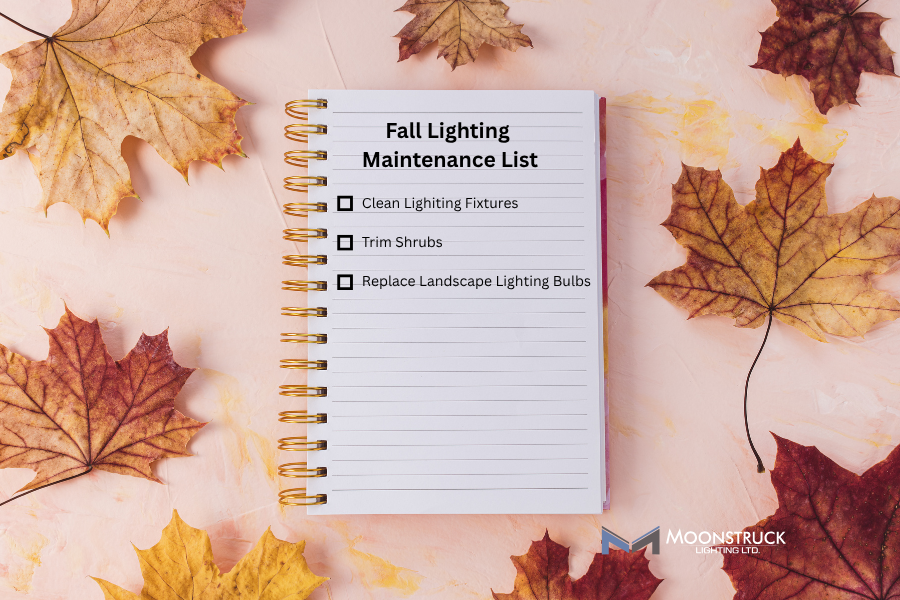
- Clear Leaves, Mulch, and Debris Off Fixtures: Accumulated fallen leaves, pine needles, and garden mulch can cover ground-buried fixtures, trap moisture, and block light distribution. Clearing debris prevents lens blockage and eliminates thermal traps that can degrade fixture housings.
- Clean Fixture Lenses to Restore Full Brightness: Summer dirt, mineral deposits, and soil splatter leave a film on glass lenses. Washing lenses with mild soapy water removes grime and restores maximum lumen output across your landscape.
- Inspect Trenching for Exposed Cables: Freeze-thaw cycles, soil shifts, and summer garden work can push direct-burial cables up toward the surface. Exposed wiring is vulnerable to lawnmowers, snow shovels, and frost heave damage. Under the Ontario Electrical Safety Code (OESC), low-voltage wiring must maintain proper trenching depth (15 cm to 45 cm) and be sleeved in rigid PVC conduit when passing under hardscapes or driveways.
- Trim Overgrown Shrubs & Re-Aim Lighting for Autumn Canopies: Trim back overgrown branches that obscure light paths. Re-aiming fixtures allows you to showcase vibrant autumn leaves on specimen trees like Japanese Maples, Magnolias, and Birch, or highlight intricate branch silhouettes as leaves drop. Techniques like downlighting (“moonlighting”) – where fixtures mounted high in tree canopies cast soft light downward replicate natural moonlight filtering through branches.
Adjusting Automation & Enhancing Fall Outdoor Living
Shorter autumn days require adjustments to keep your outdoor living spaces warm, inviting, and secure.
- Update Timers & Smart Control Schedules: As Toronto’s sunset times shift earlier each week, adjust your automated schedules or smartphone controls so entry sconces, driveway bollards, and path lights turn on before dark. This eliminates dark entryways and improves safety without resorting to harsh, blinding floodlights.
- Leverage Warm 2700K Color Temperatures: Using 2700K warm white accent lighting brings out the rich red, orange, and golden hues of autumn foliage, transforming your yard into living art after dark.
- Extend Outdoor Patio Season with Integrated Hardscape Lighting: Low-glare step lights and under-cap LED strips recessed into retaining walls, stone steps, and poolside pavers create ambient, comfortable environments around fire pits and outdoor kitchens during crisp autumn evenings.
Professional Electrical Standards & Winterproofing
While low-voltage (12V) landscape lighting operates at a secondary voltage, the primary system connects directly to high-voltage residential electrical panels and exterior outlets exposed to damp Canadian soil and sub-zero temperatures.
Moonstruck Lighting Ltd holds Authorized Contractor Program (ACP) status with Ontario’s Electrical Safety Authority (ESA), ensuring every project and service check adheres strictly to code:
- The 80% Transformer Load Rule: Continuous electrical loads should never exceed 80% of a transformer’s maximum rated output to prevent thermal overload and internal circuit failure during temperature fluctuations.
- Weatherproof GFCI Outlets: Primary connections must plug into exterior Class A Ground Fault Circuit Interrupter (GFCI) outlets protected by heavy-duty, wet-location-rated “Extra Duty” (while-in-use) cover plates to keep melting snow and rain out.
- Submersible IP68 Splice Connections: Standard twist-on wire nuts absorb ground moisture and fail over time. Professional installations utilize IP68-rated, silicone-gel-filled connectors or gel-filled heat shrink tubing that form an airtight, fully submersible seal.
- Durable Solid Cast Brass Fixtures: Store-bought plastic or thin aluminum fixtures corrode rapidly under road salt and freeze-thaw stress. Solid cast brass or marine-grade aluminum fixtures rated IP65 or higher are built to withstand harsh Ontario winters year after year.
Why Work with Moonstruck Lighting Ltd?
Did you know we offer an outdoor lighting maintenance program? Landscape lighting is a specialized discipline requiring a combination of artistic vision and rigorous electrical engineering. Recognized with Awards of Excellence at the Landscape Ontario Awards Gala, Moonstruck Lighting Ltd delivers custom design, professional installation, and complete system servicing tailored to Toronto, the GTA, and Cottage Country properties.
Prepare Your Property Before the Freeze With Moonstruck Lighting Ltd
Don’t let early sunsets or incoming winter weather jeopardize your outdoor lighting system. Whether you need a comprehensive autumn system check, wire repair, fixture re-aiming, or an upgrade to permanent smart lighting, our team of ESA-certified electricians is ready to help.
Ready to prepare your outdoor lighting for fall? Contact Moonstruck Lighting Ltd today to book your professional Fall Maintenance Service or schedule a design consultation.
Founded in 1994, Moonstruck Lighting Ltd has delivered high-end landscape lighting design, installation, and electrical servicing across Toronto and the Greater Toronto Area (GTA) for over three decades.