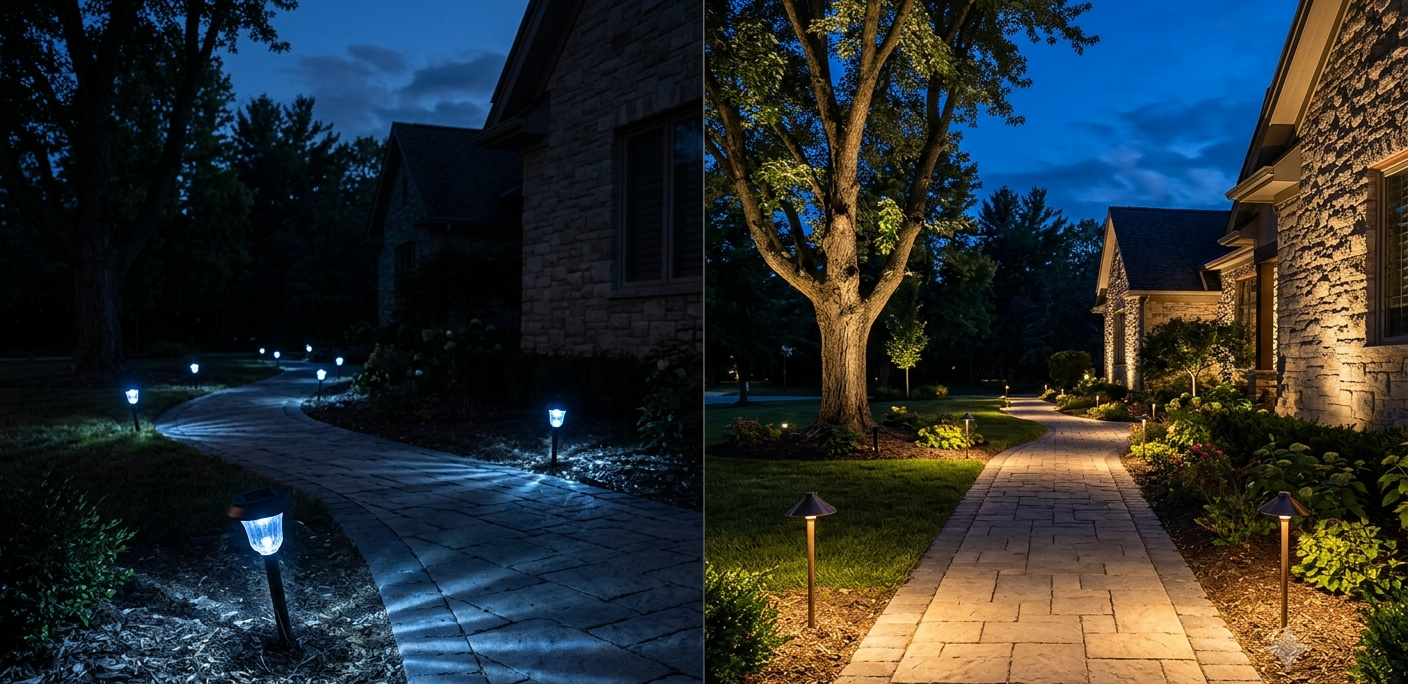
Outdoor landscape lighting does far more than highlight your property’s best architectural features and extend your evening patio usability, it transforms your home’s security and curb appeal. However, many homeowners and general landscape contractors treat outdoor lighting as a basic aesthetic add-on, assuming that low-voltage (12V) systems carry zero risk.
In Ontario, outdoor lighting installations interface directly with high-voltage residential electrical panels, exterior outlets, and harsh environmental elements. Failing to adhere to regional electrical codes or miscalculating power loads can result in premature system failure, property damage, and severe legal liability. Hiring a Licensed Electrical Contractor (LEC) certified by the Electrical Safety Authority (ESA) ensures your outdoor lighting system is reliable, safe, and code-compliant.
Strict Compliance with Ontario Electrical Safety Authority (ESA) Standards
In Ontario, all electrical work, including exterior architectural and landscape lighting is governed by the Ontario Electrical Safety Code (OESC). The law mandates that electrical installations be completed by a Licensed Electrical Contractor (LEC) holding an active ECRA/ESA license number.
Permits and Notifications of Work
Any line-voltage (120V) electrical connection, main breaker panel addition, or installation of new exterior receptacles legally requires a Notification of Work (electrical permit) filed with the ESA prior to beginning the project. Unlicensed handymen or general landscapers cannot legally pull these permits in Ontario, leaving your installation uninspected and undocumented.
Class A GFCI Protection and Weatherproofing
The primary high-voltage side of any landscape lighting transformer must plug into or connect to an exterior Ground Fault Circuit Interrupter (GFCI) outlet certified as Class A protection. Under Ontario code, exterior outlets must also utilize heavy-duty, wet-location-rated “Extra Duty” (while-in-use) cover plates. These enclosures ensure that transformer plugs remain completely protected from rain, melting snow, and garden hose overspray while in operation.
Official Certificate of Acceptance
Upon completing an inspection-eligible project, an ESA inspector evaluates the wiring, grounding, and connections. Only an LEC can issue an official ESA Certificate of Acceptance upon completion. This legal document proves to municipal inspectors, future home buyers, and insurance adjusters that all exterior electrical installations were completed safely and lawfully.
Accurate Transformer Load & Voltage Drop Calculations
Low-voltage LED landscape lighting systems operate on a 12-volt to 15-volt secondary circuit powered by a step-down transformer. While 12V currents carry a lower shock hazard than 120V household lines, poor system design quickly leads to flickering lights, dim fixtures at the end of runs, or transformer burnout.
The 80% Safety Capacity Rule
Transformers convert 120V household AC power into low-voltage DC/AC power. Continuous electrical loads should never exceed 80% of a transformer’s maximum rated output. For example, if a homeowner plans a multi-fixture layout drawing a combined 72 Watts of continuous power, standard engineering principles require a transformer rated for at least 90 Watts.
Installing a 75W transformer for a 72W system pushes the unit to 96% capacity, causing ambient heat buildup, internal thermal tripping, and premature internal board failure during humid summer months.
Managing Voltage Drop and Cable Topology
Current traveling through copper wire encounters resistance over distance, causing the available voltage to drop steadily. On a 100-Watt circuit running 120 feet using standard 12/2 AWG wire, the voltage drops from 12V down to approximately 8.05V by the final fixture. Bulbs operating below 10.5V experience noticeable color shifting, dimming, and rapid LED driver failure.
Certified electricians combat voltage drop through advanced circuit design
Code-Compliant Trenching & Waterproofing Standards
Ontario’s environment subjects underground wiring to extreme freeze-thaw cycles, high soil moisture levels, and physical disturbance from garden tools, lawn aerators, and root growth.
Mandatory Wiring Burial Depths
The OESC mandates specific trenching depths based on cable voltage and surface cover to prevent accidental cable severance:
- Low-Voltage Cable (under lawns/gardens): Must be buried at least 15 cm to 45 cm deep depending on mechanical protection.
- Line-Voltage Wiring (120V feed to transformers): Requires a minimum trench depth of 45 cm to 60 cm when using NMWU or direct-burial cables in non-vehicular areas.
- Driveway & Hardscape Crossings: Cabling running under driveways or stone walkways must be sleeved inside rigid PVC conduit to protect the lines from heavy load compaction.
Direct-Burial Standards and Waterproof IP68 Connections
Generic extension cords or indoor-rated cabling quickly deteriorate when exposed to damp acidic soil, UV rays, and sub-zero temperatures. Certified installers use exclusively CSA-approved, sunlight-resistant UF-B or low-voltage direct-burial cable.
Furthermore, standard twist-on wire nuts or electrical tape wrapped around wire splices fail within months under Canadian winter conditions, allowing water to wick up the copper strands into the fixture. Electricians utilize IP68-rated, silicone-gel-filled wire connectors or heat-shrink solder sleeves that form an airtight, fully submersible seal around every connection.
Protecting Your Home Insurance Policy & Property Value With a Certified Electrician
Outsourcing electrical work to uncertified handymen or doing high-voltage exterior wiring as a DIY project introduces severe financial exposure.
Risk of Denied Property Insurance Claims
Under standard Ontario residential insurance policies, policyholders are obligated to maintain property safety and comply with local building and electrical codes. If an unpermitted 120V exterior connection or overloaded transformer leads to an exterior wall fire, electrical short, or property damage, insurance adjusters routinely investigate whether an ESA permit was issued. Work completed by an unlicensed installer can serve as grounds for denied insurance claims, leaving the homeowner personally liable for damages.
Common DIY vs. Certified Electrician Installation Pitfalls
| Mistake / Feature | Unlicensed / DIY Setup | Certified Electrician Solution |
| Splice Waterproofing | Standard twist-nuts or electrical tape that absorb ground moisture. | IP68-rated silicone-gel connectors or gel-filled heat shrink tubing. |
| Power Supply Source | Spliced into indoor circuits or plugged into ungrounded outlets. | Dedicated exterior GFCI receptacle with an “Extra Duty” cover. |
| Trenching Depth | Shallow placement exposed to aerators, shovels, and frost heaves. | Trenched to OESC depth specifications and sleeved under hardscapes. |
| Transformer Sizing | Operating near 100% capacity, risking thermal breakdown. | Sized with an 80% continuous load cap for long-term reliability. |
Investing in professional outdoor lighting elevates your property’s security, accessibility, and architectural beauty while maintaining rigorous safety standards. Moonstruck Lighting Ltd delivers fully licensed, ESA-compliant landscape lighting design, installation, and electrical servicing across Toronto and the Greater Toronto Area. Contact Moonstruck Lighting Ltd today to schedule a consultation with an ESA-certified electrician.